
_edited.png)
How do you manage breakdowns in remote mining locations?

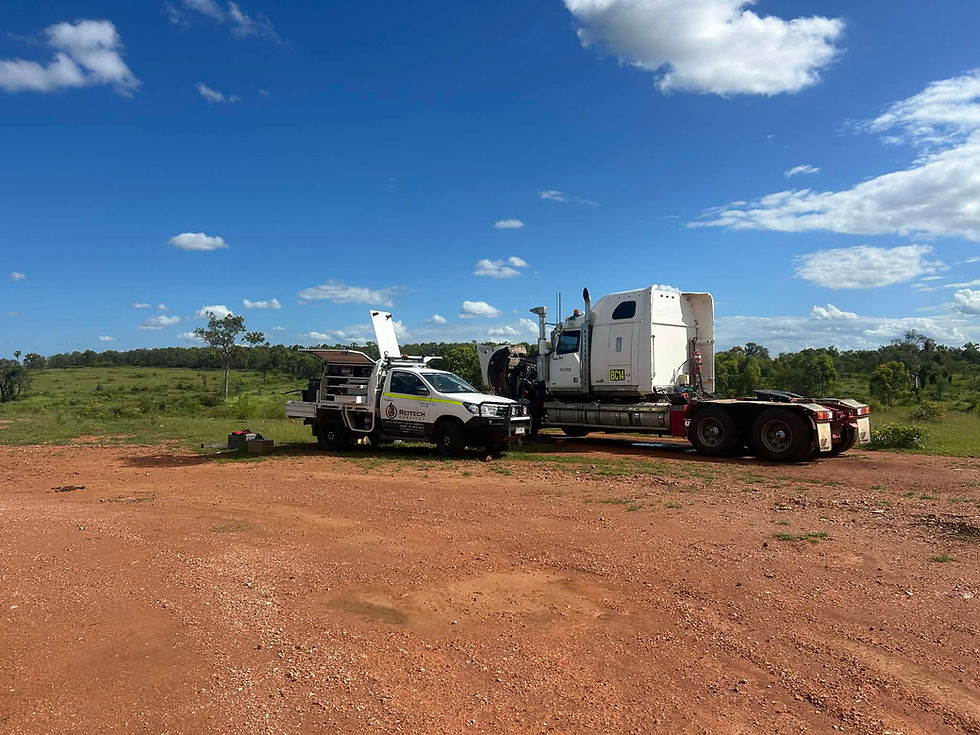
Breakdowns in remote mining locations are not just an inconvenience; they are a direct hit to production, safety, and cost. When you are hours from the nearest workshop, with limited access to parts, people, and support, a simple mechanical issue can escalate quickly if it is not handled correctly.
Managing breakdowns in these environments is not about reacting faster than everyone else. It is about building systems that allow you to respond with clarity, control, and consistency when things go wrong. The sites that handle breakdowns well are not the ones that never have them; they are the ones that understand exactly what to do when they happen.
Understanding the real cost of a breakdown
On paper, a breakdown is a piece of equipment that is no longer operational. On-site, it is far more than that. It is lost production, delayed schedules, increased pressure on other machines, and often a ripple effect across multiple crews.
In remote locations, the cost compounds quickly. Every hour spent waiting on support, every delay in diagnosis, and every incorrect call extends the downtime. When access is limited and resources are stretched, there is very little margin for error, and this is why managing breakdowns properly starts long before anything actually fails.
Preparation is the difference
Most breakdowns are not entirely unpredictable. The issue is not that they happen; it is that many sites are not prepared for how to deal with them when they do.
Preparation at a site level should include clear escalation processes, defined responsibilities, and access to the right level of technical support. It should be obvious who is contacted first, what information needs to be provided, and how decisions are made under pressure.
Preparation from our team means having field service teams that are equipped and ready to respond without relying on a workshop environment. Vehicles need to be set up to handle a wide range of repairs, not just minor fixes. Tooling, diagnostics, and parts availability all play a role in whether a breakdown can be resolved quickly or turns into extended downtime.
Early diagnosis sets the tone
The first response to a breakdown often determines how long it will take to resolve. If the issue is misdiagnosed or the wrong assumptions are made early, time is lost, and the situation becomes more complex than it needs to be.
Accurate diagnosis in remote mining environments relies on experience. It requires technicians who understand heavy machinery, who can identify patterns, and who know what to look for under pressure. It also relies on clear communication from site teams, including detailed descriptions of the fault, recent machine behaviour, and any prior issues.
The more accurate the initial information, the more effective the response.
Mobilisation matters more than speed alone
There is often a focus on response time, which is important, but speed without preparation does not solve the problem. Mobilising the right people, with the right tools and parts, is far more valuable than simply arriving quickly.
In remote locations, mobilisation needs to be deliberate. Travel time, site access, safety requirements, and environmental conditions all need to be factored in. A well-prepared field service team arrives ready to work, not to assess what they are missing.
This is where fully equipped service vehicles make a difference. Being able to carry out diagnostics, repairs, and component replacements on site reduces the need for additional trips and keeps downtime to a minimum.
Working within site constraints
Remote mining sites are not controlled environments. Weather, terrain, shift schedules, and operational priorities all influence how and when repairs can be carried out.
Managing breakdowns effectively means working within these constraints rather than against them. Field service teams need to integrate with site operations, align with safety protocols, and adapt to changing conditions without compromising the quality of the repair.
This is not just technical work; it is operational awareness. Understanding how the site runs allows repairs to be completed in a way that supports, rather than disrupts, ongoing work.
Communication keeps everything moving
Breakdowns create pressure, and pressure often leads to poor communication if it is not managed properly. Clear, consistent updates are critical, both from the site to the contractor and from the contractor back to the site.
Everyone involved needs to know what is happening, what has been identified, what the next steps are, and what the expected timeframe looks like. Uncertainty slows decision-making and creates unnecessary friction.
Strong communication also allows for better planning. If a repair is going to take longer than expected, operations can adjust. If additional support is required, it can be organised early rather than reacting at the last moment.
The role of preventative thinking
While this is about managing breakdowns, the best sites are always thinking one step ahead. Every breakdown is an opportunity to identify why it happened and how it can be prevented in the future.
This does not mean eliminating all risk, which is not realistic in mining environments. It means reducing the likelihood of repeat failures and improving the reliability of critical equipment.
Preventative maintenance programs, regular inspections, and data tracking all contribute to this. When combined with experienced field service support, they create a system where breakdowns are managed effectively when they occur and are reduced over time.
Choosing the right field service support
Not all field service providers are built for remote mining environments. The difference becomes clear when a breakdown happens.
A capable provider brings more than tools and labour. They bring experience in remote operations, an understanding of site pressures, and the ability to make decisions quickly and confidently. They arrive prepared, communicate clearly, and focus on resolving the issue without unnecessary delays.
For sites operating in regions like the Bowen Basin and Moranbah, local presence also plays a role. Familiarity with the area, the conditions, and the types of operations being run allows for faster, more effective support.
Want to get in touch with us or book in?


Comments